Category: Products
Hotline
Tel: +86 133 1175 6197
WeChat: L13311756197
Email: postmaster@suoqi-cable.com
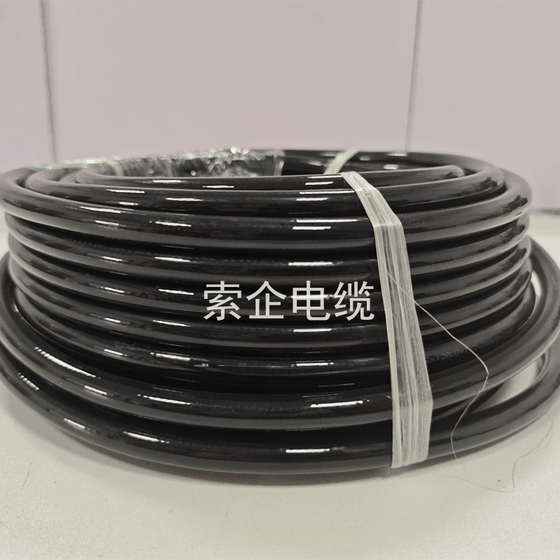
In scenarios such as chemical engineering and machine tool processing, cutting fluids, oil stains, and acidic or alkaline media continuously corrode cable sheaths, causing general PVC/rubber materials to age and crack rapidly, significantly reducing their service life. Addressing this pain point, Shanghai Suoqi's polyurethane cables have been specifically optimized from materials to processes: the conductors consist of multi-stranded, finely twisted oxygen-free bare copper wires; the insulation uses special elastomer materials; the outer sheath is made of imported polyurethane (PUR/TPU), resistant to oil, acids, alkalis, UV, and aging. In actual applications, the products are recognized by customers in mining, tunneling, and wet spraying fields for their wear resistance, tensile strength, and oil resistance. Insulation: special mixed PVC materials are selected, with uniform insulation thickness ranging from 0.5mm to 2mm, accurately matched according to the cable's rated voltage. Temperature resistance: -40℃ to 90℃.
Product Features
Specifications Conductor: Made with multi-strand ultra-fine finely twisted oxygen-free copper wire, strictly compliant with VDE0295 CLASS 6 standards. Single wire diameter as fine as 0.1mm, with the number of strands ranging from dozens to hundreds depending on cable specifications, ensuring flexibility and conductivity.
Insulation layer: Uses special mixed PVC material, with uniform insulation thickness between 0.5mm and 2mm, precisely matched according to cable rated voltage. Insulation resistance ≥ 100MΩ·km (at 20°C).
Shielding layer: Made of tinned copper mesh braid, with a shielding density of ≥80%, and a uniform tin plating thickness, which can effectively prevent copper mesh oxidation and improve the longevity of the shielding effect.
Rated voltage: Can be customized according to actual needs, commonly 300/500V, 0.6/1kV, etc., and can be customized up to 10kV to meet the power requirements of different equipment.
Cable outer diameter: varies according to specifications, ranging from 10mm to 50mm, and can be selected according to the installation space of the equipment.
Application scenarios
Industrial automation, machinery manufacturing, port terminals, and mining operations
Technical Parameters
Parameter item
Technical indicators
Insulation layer
Selected special blended PVC material, with uniform insulation thickness ranging from 0.5mm to 2mm, precisely matched according to different cable rated voltages, with insulation resistance ≥100MΩ·km (at 20°C).
Shielding layer
Made of tinned copper mesh weaving, with a shielding density ≥80%, uniform tin plating thickness, effectively preventing copper mesh oxidation and enhancing the durability of the shielding effect.
Sheath
PURJ polyurethane material, with a sheath thickness of 1mm - 3mm, smooth surface, and good scratch resistance.
Operating temperature
-40°C to 90°C. Within this temperature range, all cable performance indicators remain stable, with no hardening, brittleness, or softening occurring.
Rated voltage
Customization can be made according to actual needs, with common options including 300/500V, 0.6/1kV, etc., and up to 10kV to meet the power requirements of devices with different power levels.
Cable outer diameter
The specifications vary, ranging from 10mm to 50mm, and can be selected according to the installation space of the equipment.
Minimum bending radius
For fixed installation, it is 4 times the outer diameter of the cable; for mobile installation, it is 8 times the outer diameter of the cable, facilitating wiring installation in different scenarios.
Customized services
Direct sales from Shanghai Suoqi cable factory source, supporting on-demand customization of multiple core counts and specifications. Ample stock available, nationwide shipping. Consultation hotline: 13311756197
Frequently Asked Questions
How to choose between polyurethane cables and PVC cables?
For indoor, dry, low-cost scenarios, PVC can be selected; for oily, outdoor, frequently moving, or long-life requirements, PUR is the priority.
Will polyurethane cables hydrolyze?
Ether-based PUR has excellent hydrolysis resistance, far superior to polyester-based types. Ether-based formulations should be specified for long-term humid environments.
Related product recommendations
Petrochemical Cost Optimization of Polyurethane Cables
Tensile Design of Storage and Logistics for Polyurethane Cables
Hydropower troubleshooting of polyurethane cables
