Category: Products
Hotline
Tel: +86 133 1175 6197
WeChat: L13311756197
Email: postmaster@suoqi-cable.com
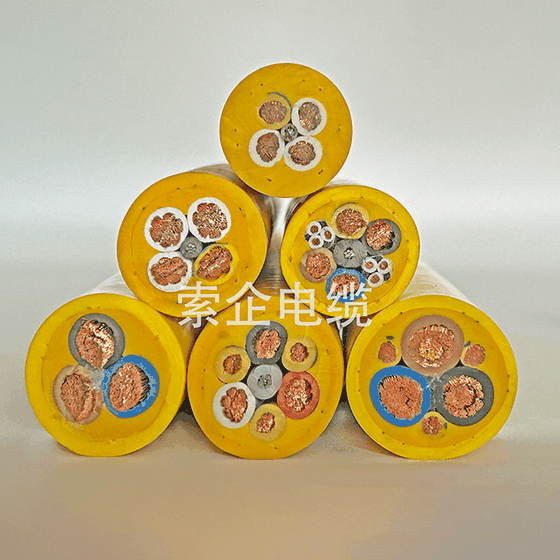
The key to selecting reel cables is working conditions. Shanghai cable reel cables use conductors stranded with multi-strand ultra-fine oxygen-free bare copper wire (VDE 0295 CLASS 5/6 standard), with imported polyurethane PUR composite sheaths. The double-layer sheath is reinforced with a tensile braided layer for anti-twisting and anti-bulging, offering core advantages such as weather resistance, polyurethane, and tensile strength, making it widely suitable for ports, logistics, lifting scenarios, and more. Direct sales from the original manufacturer with stable delivery times. Welcome to call 13311756197 for selection plans.
Product Features
(2) An Ideal Choice for Other Port Loading and Unloading Equipment Besides container cranes, it is also widely suitable for port gantry cranes, ship unloaders, ship loaders, and other equipment. At bulk cargo terminals, ship unloaders face harsh operating conditions with flying dust and humidity. This cable, relying on domestically developed weather-resistant and anti-aging properties, effectively resists dust intrusion and moisture corrosion, ensuring reliable equipment operation, improving port cargo throughput efficiency, and demonstrating the broad applicability of domestically made cables.
Application scenarios
Industrial automation, machinery manufacturing, port terminals, and mining operations
Customized services
Direct sales from Shanghai Suoqi cable factory source, supporting on-demand customization of multiple core counts and specifications. Ample stock available, nationwide shipping. Consultation hotline: 13311756197
Frequently Asked Questions
Why is a Kevlar tensile layer used in reel cables?
During winding and unwinding, the cable is subjected to continuous axial tension. Aramid/Kevlar tensile fibers can share the tension, preventing the conductor from being elongated or deformed and ensuring stable electrical performance.
What is the minimum bending radius of a reel cable?
Generally, it should be no less than 6 times (6D) the outer diameter of the cable. For reel winding and unwinding conditions, it is recommended to check according to the diameter of the equipment drum to avoid long-term bending that could cause the sheath to crack.
Related product recommendations
Industrial Automation Installation Standards for Reel Cables
Tensile Design of Warehouse Logistics for Reel Cables
The sheathing process of reel cable for rail transit
