Category: Products
Hotline
Tel: +86 133 1175 6197
WeChat: L13311756197
Email: postmaster@suoqi-cable.com
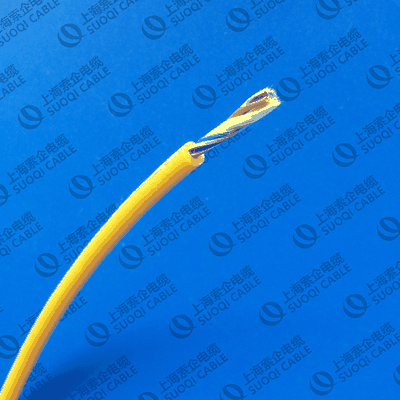
In water-related environments such as coastal ports, aquaculture, and shallow sea operations, ordinary cables are corroded by seawater salt ions, with rapid aging of insulation layers and conductor oxidation and corrosion, making safety hazards prominent. Shanghai Suoqi Seawater Protection Cable is specially designed for these conditions, featuring a stranded core with tin-plated copper braided shielding, and a sheath made of specially made seawater-resistant PUR composite material, resistant to salt ion penetration corrosion, suitable for underwater nearshore high-humidity salt spray environments. The cable features high flexibility, polyurethane, and PUR, and is widely used in chemical, underwater, robotics, and other fields. Shanghai Suoqi Cable is sold directly from the source factory, customizing multiple cores and specifications on demand, with ample stock and nationwide shipping. Hotline 13311756197 consultation.
Product Features
Highly flexible design, worry-free in mobile scenarios. Internally, it uses multi-stranded, finely twisted oxygen-free copper conductors, combined with highly elastic TPE insulation material and a Kevlar tensile fiber braided layer, giving the cable excellent flexibility. Tests show it can withstand over 8 million bending cycles, with a minimum bending radius of 6D (D being the cable's outer diameter). In drag chain systems, underwater robots, or other frequent movement or bending conditions, it maintains continuous conductivity without breaking, meeting the demands of high-dynamic applications.
Wide temperature range, durable, safe and environmentally friendly. Operating temperature range reaches **-40°C~90°C**, suitable for normal use in cold seas and high-temperature working environments. No halogen or heavy metal additives. Insulation resistance ≥ 500MΩ/km, voltage resistance rating up to 300/500V, flame retardant rating compliant with IEC 60332-1 standard, safe and reliable.
3. Application Scenarios Marine Aquaculture and Monitoring: Used for power supply and signal transmission of underwater aerators and water quality monitoring equipment, resistant to seawater and aquaculture agent corrosion, and adapted to equipment mobility needs.
Coastal Chemical and Environmental Protection Engineering: In the wiring of equipment such as pump bodies and agitators for handling weakly acidic and alkaline wastewater, resist corrosion while meeting the high flexibility requirements for frequent start-stop of the equipment.
Port loading and unloading and ship equipment: Compatible with port crane drag chain systems and ship deck mobile equipment connections, handling sea breeze salt spray and engine room oil contamination environments.
Application scenarios
Industrial automation, machinery manufacturing, port terminals, and mining operations
Customized services
Direct sales from Shanghai Suoqi cable factory source, supporting on-demand customization of multiple core counts and specifications. Ample stock available, nationwide shipping. Consultation hotline: 13311756197
Frequently Asked Questions
What are the key points for selecting cables for offshore platforms?
Clarify water depth, whether it moves, temperature range, and mechanical stress, and prioritize salt spray-resistant PUR sheaths with tensile reinforcement structures.
How deep water pressure can seawater-resistant cables withstand?
The vertical watertight type can reach a water depth of 300m, with the specific model selected according to the laying depth, and the joint sealing process confirmed.
Related product recommendations
Port and wharf sheath technology for seawater-resistant cables
Storage, Logistics, and Installation Specifications for Seawater-Resistant Cables
Marine Engineering Installation Standards for Seawater-Resistant Cables
