Category: Products
Hotline
Tel: +86 133 1175 6197
WeChat: L13311756197
Email: postmaster@suoqi-cable.com
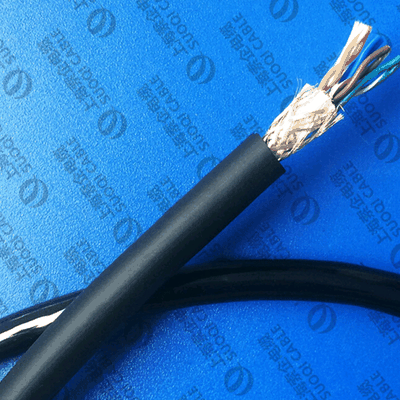
Scenarios such as ocean monitoring and underwater aquaculture require high data transmission performance, and conventional network cables cannot withstand seawater corrosion and humid environments, with severe signal attenuation causing communication interruptions. To address this issue, Shanghai Suoqi seawater-resistant network cables have been specifically optimized in both materials and processes: conductors are high-purity oxygen-free copper; twisted pairs are individually shielded with aluminum foil and tinned copper overall shielded; the outer sheath is seawater-resistant polyurethane (PUR), ensuring stable underwater signal transmission. In practical applications, the product has been recognized by customers in the chemical, underwater, and robotics fields for its high flexibility and use of polyurethane (PUR). Customization according to drawings and direct delivery of stock are supported. For details, call 13311756197.
Product Features
Highly flexible design, worry-free in mobile scenarios. Internally, it uses multi-stranded, finely twisted oxygen-free copper conductors, combined with highly elastic TPE insulation material and a Kevlar tensile fiber braided layer, giving the cable excellent flexibility. Tests show it can withstand over 8 million bending cycles, with a minimum bending radius of 6D (D being the cable's outer diameter). In drag chain systems, underwater robots, or other frequent movement or bending conditions, it maintains continuous conductivity without breaking, meeting the demands of high-dynamic applications.
Wide temperature range, durable, safe and environmentally friendly. Operating temperature range reaches **-40°C~90°C**, suitable for normal use in cold seas and high-temperature working environments. No halogen or heavy metal additives. Insulation resistance ≥ 500MΩ/km, voltage resistance rating up to 300/500V, flame retardant rating compliant with IEC 60332-1 standard, safe and reliable.
3. Application Scenarios Marine Aquaculture and Monitoring: Used for power supply and signal transmission of underwater aerators and water quality monitoring equipment, resistant to seawater and aquaculture agent corrosion, and adapted to equipment mobility needs.
Coastal Chemical and Environmental Protection Engineering: In the wiring of equipment such as pump bodies and agitators for handling weakly acidic and alkaline wastewater, resist corrosion while meeting the high flexibility requirements for frequent start-stop of the equipment.
Port loading and unloading and ship equipment: Compatible with port crane drag chain systems and ship deck mobile equipment connections, handling sea breeze salt spray and engine room oil contamination environments.
Application scenarios
Industrial automation, machinery manufacturing, port terminals, and mining operations
Customized services
Shanghai Suoqi Cable offers seawater protection network cable selection guidance and on-demand customization services, with multiple cores, multiple specifications, and flexible combination of spot and futures. For details, please inquire 13311756197 (WeChat number is the same).
Frequently Asked Questions
How to connect seawater protection network cables for waterproofing?
It is necessary to use waterproof connectors and sealing processes to prevent moisture from seeping along the cable core, which could affect the signal and lifespan.
What is the difference between seawater protection cables and regular cables?
Ordinary cables are not resistant to salt spray or water immersion. Seawater-resistant cables use PUR sheaths and independent aluminum foil shielding, allowing long-term stable signal transmission underwater.
Related product recommendations
Optimization of Power Maintenance Costs for Seawater-Resistant Network Cables
Tensile Design of Rail Transit Resistant to Seawater Network Lines
Troubleshooting of seawater-resistant network cable tunnel engineering
