Category: Products
Hotline
Tel: +86 133 1175 6197
WeChat: L13311756197
Email: postmaster@suoqi-cable.com
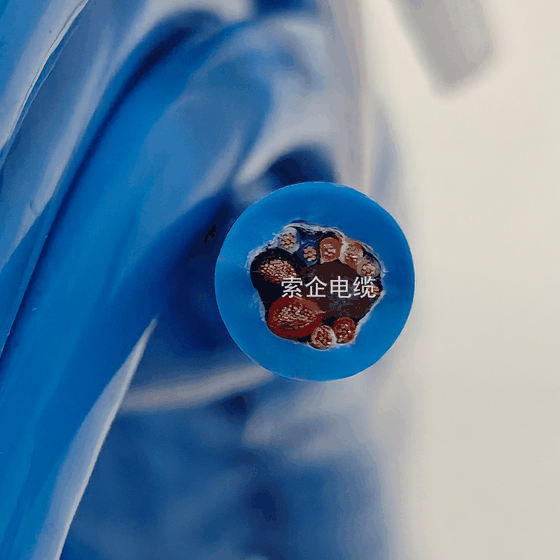
The key to selecting seawater-resistant cables is to consider the operating conditions. Shanghai Suoqi seawater-resistant cables use oxygen-free copper multi-strand conductors, insulation made of special waterproof elastomer, and an outer sheath of salt-spray-resistant polyurethane (PUR), with double-layer sealing and waterproof adhesive filling. They feature an IP67 waterproof rating and core advantages including wear resistance, oil resistance, and corrosion resistance, making them widely suitable for underwater and other scenarios. Direct sales from the source manufacturer with stable delivery times. Welcome to call 13311756197 for selection solutions.
Product Features
Product Electrical Parameters Rated voltage: 0.6/1KV and below Voltage range customizable; Temperature range: -40~90°C; Bending radius: 7.5~8*D (for mobile use); ---
Application scenarios
Industrial automation, machinery manufacturing, port terminals, and mining operations
Customized services
As a source manufacturer of special flexible cables, Shanghai Suoqi can customize seawater-resistant cables according to drawings or working conditions, with stable delivery times and controllable quality. Welcome to call 13311756197 for solutions and quotations.
Frequently Asked Questions
Do seawater-resistant cables need to undergo salt spray testing?
Required. High-quality products must withstand salt spray tests for ≥1000 hours to verify the jacket's resistance to marine corrosion and microbial erosion.
Why do seawater protection cables use tin-plated copper conductors?
The tin plating layer blocks corrosion of copper caused by seawater chloride ions, and together with the PUR sheath and composite shielding, it ensures long-term underwater electrical stability.
Related product recommendations
Maintenance and upkeep of marine engineering for seawater-resistant cables
Maintenance and upkeep of seawater-resistant cables in petrochemical industry
Bending life of seawater-resistant cables at port terminals
