Category: Products
Hotline
Tel: +86 133 1175 6197
WeChat: L13311756197
Email: postmaster@suoqi-cable.com
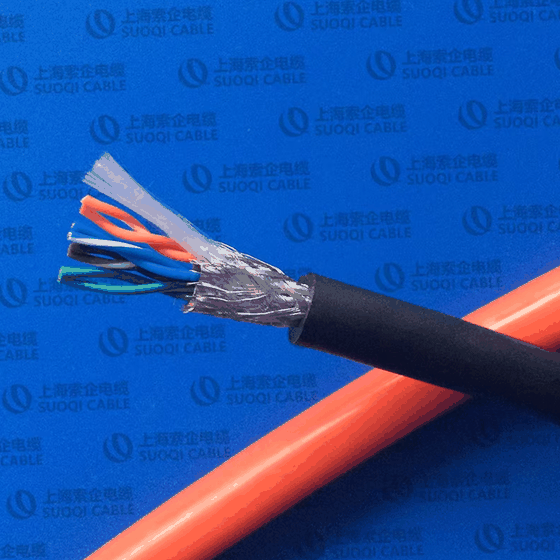
Scenarios such as ocean monitoring and underwater aquaculture require high data transmission performance, and conventional network cables cannot withstand seawater corrosion and humid environments, with severe signal attenuation leading to communication interruptions. To address this issue, Shanghai Soqi seawater-resistant network cables have been specifically optimized in both materials and processes: conductors are high-purity oxygen-free copper; twisted pairs are shielded with aluminum foil per pair and tinned copper overall; the outer sheath is seawater-resistant polyurethane (PUR), ensuring stable underwater signal transmission. In practical applications, the product is recognized by customers in the marine, machinery, and underwater sectors for its corrosion resistance, weather resistance, and shielding performance. Customization according to drawings and direct shipping from stock are supported. For details, contact 13311756197.
Product Features
Optimizing Structure to Enhance Overall Protection Capabilities Multi-layer Protection Structure Design: The cable uses a multi-layer protective structure, consisting of conductor, insulation, shielding, inner sheath, armor layer, and outer sheath from inside to outside. Each layer works closely together, working together. The inner sheath and armor layer further block seawater, moisture, and microbial intrusion, providing extra protection for the internal conductor and insulation layers. The armor layer usually uses corrosion-resistant metal materials such as galvanized steel wire or stainless steel wire, which not only enhances the cable's mechanical strength and resists external impact and compression, but also helps prevent seawater from eroding the internal structure of the cable to some extent.
Antimicrobial Corrosion Properties: The ocean contains a large number of microorganisms, some of which attach to cable surfaces and secrete corrosive substances that accelerate cable corrosion. Shanghai Suo Qi's offshore wind power dedicated seawater protection cables use special surface treatment technologies and material selections to make it difficult for microorganisms to attach to and grow on the cable surface. Their outer sheath material naturally resists corrosive substances secreted by microorganisms, effectively eliminating the harm caused by microbial corrosion and ensuring long-term stable operation of cables in microbial-rich marine environments.
3. Customized Services to Meet Personalized Project Needs Shanghai Cable Enterprises understand that different offshore wind power projects have varying cable requirements, so they offer comprehensive customized services to meet customers' personalized needs.
Specification customization: Specifications such as cable conductor thickness and number of cores can be customized according to parameters such as the power level, operating voltage, and current of offshore wind power equipment. For high-power offshore wind turbines, conductors with large cross-sections can be customized to ensure they can withstand sufficient current to meet the equipment's power demands; For situations requiring simultaneous transmission of multiple signals or controlling multiple devices, multi-core cables can be customized, with each core transmitting different signals independently to avoid signal interference and ensure the normal operation of all equipment. For example, in some large offshore wind farms, the power of wind turbines varies by region, and cable specifications vary. Customized cables can be precisely configured according to the actual needs of each area, improving power transmission efficiency and system stability.
Custom Shape: Considering the diversity of internal space layouts and installation convenience of offshore wind power platforms, cables are available in both flat and circular shapes. Flat cables offer better installation adaptability in compact platform utility tunnels, saving installation space and facilitating wiring; Round cables perform better in scenarios requiring free rotation and bending, such as cables connecting rotatable offshore work equipment to fixed platforms. The circular design allows for smoother rotation and reduces stress concentration caused by bending. When wiring inside some offshore wind turbine trestles, flat cables can be installed along narrow spaces, reducing space occupation and improving wiring efficiency; For cables connecting offshore wind turbine blade adjustment devices and nacelles, circular designs better adapt to flexible blade movement during adjustment, ensuring stable signal and power transmission.
Application scenarios
Industrial automation, machinery manufacturing, port terminals, and mining operations
Customized services
As a source manufacturer of special flexible cables, Shanghai cable companies can customize seawater-resistant network cables according to drawings or working conditions, with stable delivery times and controllable quality. Welcome to call 13311756197 to obtain solutions and quotes.
Frequently Asked Questions
What is the difference between seawater protection cables and regular cables?
Ordinary cables are not resistant to salt spray or water immersion. Seawater-resistant cables use PUR sheaths and independent aluminum foil shielding, allowing long-term stable signal transmission underwater.
How to connect seawater protection network cables for waterproofing?
It is necessary to use waterproof connectors and sealing processes to prevent moisture from seeping along the cable core, which could affect the signal and lifespan.
Related product recommendations
Maintenance and upkeep of rail transit water-resistant network cables
Troubleshooting of petrochemical networks resistant to seawater
Bending life of seawater-resistant network cables in marine engineering
