Category: Products
Hotline
Tel: +86 133 1175 6197
WeChat: L13311756197
Email: postmaster@suoqi-cable.com
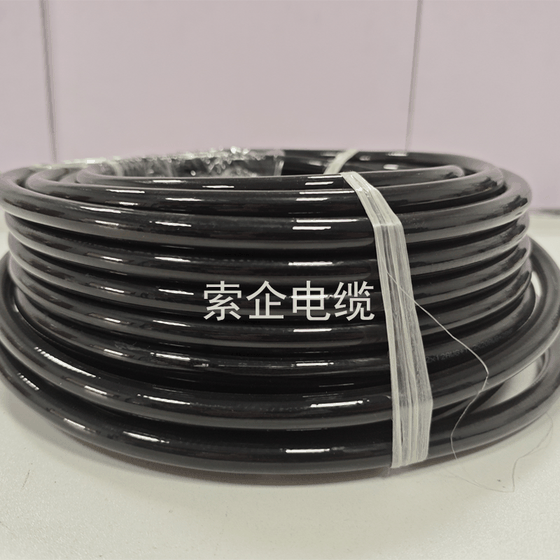
In coastal ports, aquaculture, shallow-sea operations, and other water-involved environments, ordinary cables are corroded by seawater ions, causing rapid aging of the insulation layer and oxidation and rusting of the conductors, posing significant safety risks. To address this issue, Shanghai Suoqi seawater-resistant cables have been specifically optimized in both materials and processes: twisted tinned copper braided shielding for the core, special seawater-resistant PUR composite material for the sheath, resisting ion penetration and corrosion, suitable for underwater, near-shore, high-humidity, and salt-spray environments. In actual applications, the product has been recognized by customers in the chemical, underwater, and robotics industries for its high flexibility and use of polyurethane (PUR), among other features. Custom orders according to drawings and direct shipment from stock are supported. For more details, call 13311756197.
Product Features
Highly flexible design, worry-free in mobile scenarios. Internally, it uses multi-stranded, finely twisted oxygen-free copper conductors, combined with highly elastic TPE insulation material and a Kevlar tensile fiber braided layer, giving the cable excellent flexibility. Tests show it can withstand over 8 million bending cycles, with a minimum bending radius of 6D (D being the cable's outer diameter). In drag chain systems, underwater robots, or other frequent movement or bending conditions, it maintains continuous conductivity without breaking, meeting the demands of high-dynamic applications.
Wide temperature range, durable, safe and environmentally friendly. Operating temperature range reaches **-40°C~90°C**, suitable for normal use in cold seas and high-temperature working environments. No halogen or heavy metal additives. Insulation resistance ≥ 500MΩ/km, voltage resistance rating up to 300/500V, flame retardant rating compliant with IEC 60332-1 standard, safe and reliable.
3. Application Scenarios Marine Aquaculture and Monitoring: Used for power supply and signal transmission of underwater aerators and water quality monitoring equipment, resistant to seawater and aquaculture agent corrosion, and adapted to equipment mobility needs.
Coastal Chemical and Environmental Protection Engineering: In the wiring of equipment such as pump bodies and agitators for handling weakly acidic and alkaline wastewater, resist corrosion while meeting the high flexibility requirements for frequent start-stop of the equipment.
Port loading and unloading and ship equipment: Compatible with port crane drag chain systems and ship deck mobile equipment connections, handling sea breeze salt spray and engine room oil contamination environments.
Application scenarios
Industrial automation, machinery manufacturing, port terminals, and mining operations
Customized services
As a source manufacturer of special flexible cables, Shanghai Suoqi can customize seawater-resistant cables according to drawings or working conditions, with stable delivery times and controllable quality. Welcome to call 13311756197 for solutions and quotations.
Frequently Asked Questions
Do seawater-resistant cables need to undergo salt spray testing?
Required. High-quality products must withstand salt spray tests for ≥1000 hours to verify the jacket's resistance to marine corrosion and microbial erosion.
Why do seawater protection cables use tin-plated copper conductors?
The tin plating layer blocks corrosion of copper caused by seawater chloride ions, and together with the PUR sheath and composite shielding, it ensures long-term underwater electrical stability.
Related product recommendations
Bending life of seawater-resistant cables at port terminals
Maintenance and upkeep of seawater-resistant cables in petrochemical industry
Key Points for Selecting Ports and Terminals for Anti-Seawater Cables
